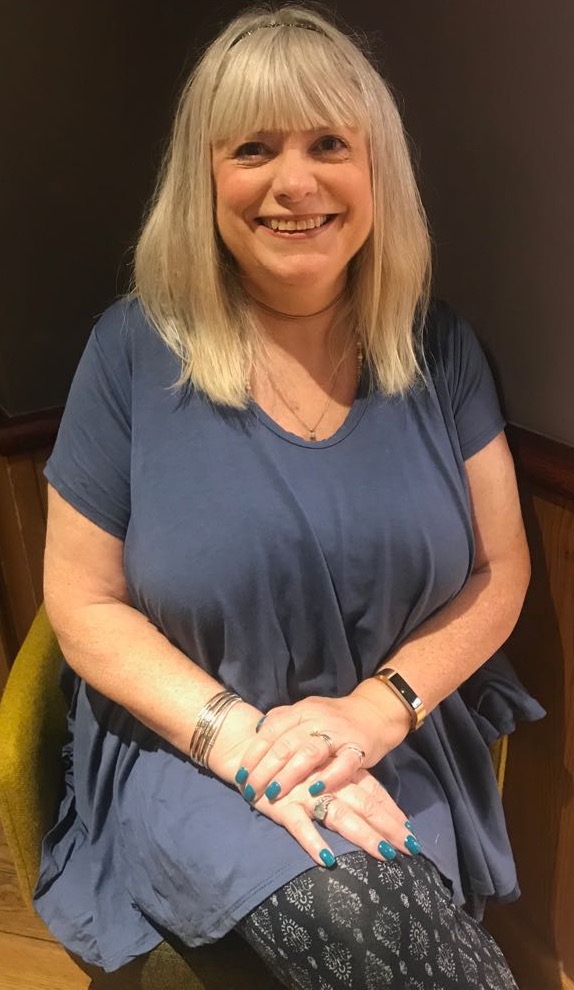
My intention in writing this blog:
The intention of my blog is to share some brief, random musings that arise in my experience or in my consciousness and that I notice feed in to my preoccupations at this time in my life. Each of the topics about which I write, simply consist of thoughts that arise in the present moment. Some posts will be serious and some more light-hearted. As a therapist, it would be too easy for me to launch in to treatises that cover a topic in great depth and breadth; but this is not meant for that purpose (although I am open to expanding on any topic in which people are interested).
The blog is only meant to be personal. So, when I speak about the death of a parent in later life, I am doing so because that is what is so present for me at the moment. As a therapist I deal with bereavement that happens at all ages. Each and every loss is different, as are people’s reactions to each loss. I see young children who have lost parents, who have to bear unspeakable pain and also younger adults, whose pain is different but no less excruciating. And, what about parents who lose a child who have their own children? I touch on this below; but, again, only in terms of my own thinking at this moment, following the sudden and unexpected death of a young, beautiful and delightful young woman, while on holiday with her husband and two young children.
The death of a parent in later life:
As we get older, we are only too aware that our parents, if we are fortunate enough still to have them, will die sooner or later. We may go through a long period of what is called ‘anticipatory grief’, which helps us to grieve in advance for what we are to lose at some point later on.
A word about anticipatory grief:
The phenomenon of anticipatory grief, the way the psyche prepares itself in advance for the inevitable, can apply to anyone close to us who faces death; but it is also at play before we leave a job, before someone goes away (e.g. to another area, emigrates etc.), before we divorce, when someone has a long illness – in short – whenever there is an impending sense of loss.
Death of my father:
I have lived with anticipatory grief for my parents for a long time and have been acutely conscious of my own mortality especially since I turned 60. My father was the gentlest, most loving parent. He was 94 when he died but was so sharp and so young at heart until the very end. He was still working part-time and he was driving. Of course, he couldn’t live forever; but he had managed 94 years and one of his sisters had died when she was 100 years old, so I dared to hope that dad would last as long.
It wasn’t to be. Just before Christmas 2018, he contracted a bad cough and my mother begged him not to go to work but to go to the doctor. On 4 December, typically, my dad left for work in spite of my mum’s pleas. He did make a doctor’s appointment for later that morning. He never got to it unfortunately. While he was in Morrisons, where he used to have breakfast, he collapsed and was taken by ambulance to Hammersmith Hospital. In short, he had pneumonia. He also had a narrowed heart artery, which caused him to collapse. He damaged his right and better eye beyond repair when he fell and, had he survived, would have had to stop working and driving. Dad could never have lived without the freedom to continue his life so, in that respect, the outcome was better for him. He was in shock at what had happened. He said he couldn’t believe it and I often wonder if he gave up. The doctors couldn’t get the pneumonia under control and he died of a heart attack early morning New Year’s Eve, just three weeks since his fall.
Nothing, not even anticipatory grief, can prepare you for the death of a parent; no matter what age you are when the parent dies. The loss of a parent is fundamental, whatever the circumstances and whatever one’s age – whether you are close to the parent or whether you have / had a difficult relationship with them. There are no words to describe the void that is left.
When we ourselves are aging, however, it feels as if our own mortality comes into much sharper focus. When the death of a parent coincides with the grief that accompanies our later life crisis, the effect and the transition are even more powerful – at least in my experience.
The sudden death of a young mother – some reflections
I recently heard about the sudden an unexpected death of a young woman while she was relaxing with her family on holiday. She was a beautiful, delightful woman from an equally lovely family. She leaves a husband and two young children, who will be shocked and devastated at their loss. The woman’s parents are also delightful people. As painful as it is having lost my father, he was 94 years old. I can’t imagine how cheated and lost parents and children must feel having lost someone so prematurely, with all their life still to lead. We know that it happens all the time but it is only when something touches us personally that we can even begin to appreciate its true impact.
In my work I have often witnessed and, indeed, felt the dreadful pain of a child who has lost a parent, both through death and through other reasons. The loss is unbearable – it is like a ship with no anchor. As older adults, we have leant enough in our lives to survive; children are unable to live on their own and are dependent on their caregivers, however dysfunctional they may be.
Parents who lose their children report that it isn’t the correct order of things. Children are expected to outlive their parents, so the pain for them is different again.
Everyone has the right to grieve
No matter what the loss and no matter what relationship we have with the person who has died, we all have the right to grieve. I have seen at close hand, following the suicide of a teenage girl, how a hierarchy quickly formed amongst her peers. Those closest to the girl formed an exclusive circle, in which they all cried together. Those less close but in her year group formed an outer circle and so it went on. Girls reported to me that they didn’t feel they had the right to grieve because they weren’t close enough to the girl who died. I had to let them know that, of course, they needed to grieve – that they had just as much right even if their grief was different. It was a massive shock to the whole school, of which they were an integral part.
In a family, it can be similar. Whose grief is the worst and who needs the most support? It is, of course, much harder to lose a spouse, especially if they had been married for over 67 years, like my parents. When my father-in-law died, my mother-in-law actually said that it was far worse to lose a husband than to lose a father. This can make the children suppress their own grief to support the surviving parent, which isn’t healthy. Of course, it is much harder to lose someone with whom you have lived every day and in these two cases, depended on for so many years; but losing a parent or a grandparent or anyone for that matter can be extremely painful and everyone’s experience is legitimate and needs to be respected.
Our own mortality
The death of a loved one or of someone we know can highlight the reality of our own mortality at any age. What I have experienced with my father’s death is that the growing feeling that time is becoming more limited as I get older, has been thrown into even sharper relief. We live in the face of death daily, as the sudden death of the young mother mentioned above and the deaths of which we hear on the news, remind us only too well. It is up to us if we choose to live a rich and fulfilling life knowing that death is always imminent, or whether we decide that there isn’t any point. As we age, it is too easy, unconsciously, to fall in to the second scenario if we aren’t careful. This and the difficulty making decisions as we age will be a theme of my blog as we go on.
What are your thoughts?
If you have any reflections on any of the topics touched on here, please feel free to post them. I should love to hear them.

 Rayna's Blog - 60 is the new 40!