Be yourself; Everyone else is already taken.
— Oscar Wilde.
This is the first post on my new blog. I’m just getting this new blog going, so stay tuned for more. Subscribe below to get notified when I post new updates.
Rayna's Blog – 60 is the new 40!
For women who want to live life to the full past the age of 60
Be yourself; Everyone else is already taken.
— Oscar Wilde.
This is the first post on my new blog. I’m just getting this new blog going, so stay tuned for more. Subscribe below to get notified when I post new updates.
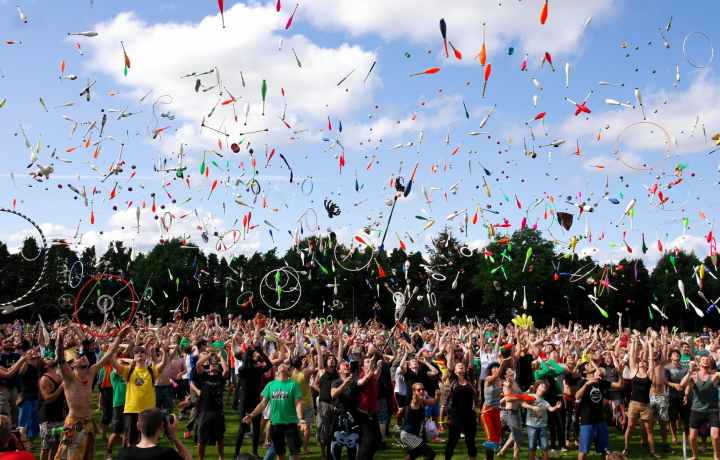
I happened to tune in to ‘The Glastonbury Experience’ on Sunday evening, having not realised that it had been on all weekend. I have never been to the festival, nor have I really ever been to many clubs or raves. I love music and I love to sing and dance in the privacy of my own home; but, when I was young, going to clubs was not considered the done thing for ‘nice’ girls and so I didn’t go. I was a 60s teenager, but was a little to young to partake in ‘love-ins’, the festivals and the drug culture that accompanied them. I knew every song in the charts by heart and I wore hippy clothes; but sex, drugs and rock and roll completely passed me by.
As for camping, after my dreadful experience of a caravan in France with no toilet in the countryside in the pouring rain, I vowed never to camp again! And I never have! So, going to Glastonbury was never on my radar, especially as the idea of camping in a muddy field has never appealed!! I like the idea of the experience I know I would have; but I know that I wouldn’t enjoy it in practice.
This being said, when I watched Glastonbury on TV on Sunday and danced and sang from the comfort of my living room, I must admit that I felt that I had missed out in my life. If I had had the courage or the maturity to rebel, I might have been more awake to the culture of my youth. Although it gave me the urge to go to Glastonbury in the future to experience the festival first, in the cold light of day, I know that this is really a pipe dream and that the lack of home comforts would quickly pall. I love the idea of going to a festival but I dare say that the reality would disappoint me. Maybe i should continue to enjoy the experience at home and leave the live experience to others who are hardier and younger than me!
In my day, there was no Careers Department in my grammar school and no advice for planning a future. The only thing I knew was that I was expected to go to University. What I was meant to study and what I would do with my degree afterwards was never discussed.
My parents had not gone to University. My mother was evacuated during the war and left school at 16. She worked in a department store in central London but stopped working when she married at 21. My father went to war young and never bothered to carry on his studies on his return. He went straight to work. So, guidance about careers from home was absent also. My parents wanted me to do well – and especially my grandfather, who helped support my education – but what I did was left to me, even though my mother desperately wanted me to fulfil her own ambition to become a doctor, which I didn’t want to do.
French was the only subject I loved and was good at and so I did that at University without a clear plan as to where the degree would lead. My school couldn’t even advise me which Universities were good to apply to and I was so naive that I didn’t realise that you could get prospectuses and visit Universities to see which to choose. So, I randomly chose my Universities not realising that each of them wanted you to put them first on the list or they wouldn’t accept you. I put two down which included Law as well as French – there were only a couple of courses that combined two subjects in those days – so I had wasted choices because I decided that I don’t have a good enough memory for Law. In the end I did an exam to get in to University College London to read French without ever having seen a past paper and was fortunate enough to be one of only 30 students in the country accepted.
Having got my degree, again I had no plan, as the University offered no guidance on Careers either. Taking a gap year was not an option in those days, so I decided to do a PGCE and go into teaching, as I had no idea what else to do. I figured that it was only a year long so I could change my mind after that but I would always have teaching to fall back on if necessary.
After you did your PGCE, you had to do a year’s probation in a school to get your qualification. So, I got a job in a girls’ grammar school, which I didn’t even know was top of the league tables and completed my year with flying colours. I was good at teaching and so, after my first year was complete, I almost inevitably settled and teaching became my career.
When I left my first school, I got a job in another leading school – this time back home in London. Yet again, I didn’t plan it. It came up and I went for it without any other reason than I wanted to come back to London to work. I had just started, when I got engaged to my now husband and we married 9 months later. There was a promotion on offer during my time at the school, which I should have easily got; but the then High Mistress, as they called the Head Teacher, made it very clear to me that she didn’t give me the job because I was married and would go and have children – she wouldn’t get away with that these days!!! She employed a colleague, who was single, instead of me.
The High Mistress wasn’t wrong. I did want to have children; and I did get pregnant. I left the school as it was still frowned upon to go back to work and a year’s maternity leave was not an option then. So, I raised my children happily before resuming work, part-time, when my younger daughter was 3. Having had a few years gap and then going back part-time, meant that I didn’t rise in the ranks or earn a high salary. It also meant that my pension was low. I did go back full-time when the girls were older but I left on a salary that teacher begin on now and my pension is insufficient for me to retire if I want a comfortable retirement.
What I never realised that the London school I had worked in was a passport to bigger and better things. I had no idea how influential the school was and where it could have taken me until many years later when I got a job because of having worked there. We can’t regret our choices – we do the best we can at the time; but I can’t help regretting that I was so naive.
I don’t want to retire because I love my work; but my lack of strategy in my life means that I feel that I can’t retire and have the life I would like. It is very hard financially for my girls too; and I want to help them as much as I can. Getting on the house ladder was much harder for them and they had to pay for University, which I didn’t. Planning is ever more important for young people if they want to lead a reasonably comfortable life.
If I have anything to advise the young people I see in my counselling room, it is to have some vision for their future, so that when they finally retire, they can enjoy the rest of their life without the burden of worrying about money. I have the choice to retire if I want to, even if my pension is low; but it is getting much harder to retire now and young people will soon have to work until the age of 75. They may not have a state pension at all in the future, so financial planning is essential now more than ever.
I can’t change my own choices. We are the product of our generation and of our environment; but I can help young people to find a clearer vision for themselves, so that they can relax after a lifetime of work.
My intention in writing this blog:
The intention of my blog is to share some brief, random musings that arise in my experience or in my consciousness and that I notice feed in to my preoccupations at this time in my life. Each of the topics about which I write, simply consist of thoughts that arise in the present moment. Some posts will be serious and some more light-hearted. As a therapist, it would be too easy for me to launch in to treatises that cover a topic in great depth and breadth; but this is not meant for that purpose (although I am open to expanding on any topic in which people are interested).
The blog is only meant to be personal. So, when I speak about the death of a parent in later life, I am doing so because that is what is so present for me at the moment. As a therapist I deal with bereavement that happens at all ages. Each and every loss is different, as are people’s reactions to each loss. I see young children who have lost parents, who have to bear unspeakable pain and also younger adults, whose pain is different but no less excruciating. And, what about parents who lose a child who have their own children? I touch on this below; but, again, only in terms of my own thinking at this moment, following the sudden and unexpected death of a young, beautiful and delightful young woman, while on holiday with her husband and two young children.
The death of a parent in later life:
As we get older, we are only too aware that our parents, if we are fortunate enough still to have them, will die sooner or later. We may go through a long period of what is called ‘anticipatory grief’, which helps us to grieve in advance for what we are to lose at some point later on.
A word about anticipatory grief:
The phenomenon of anticipatory grief, the way the psyche prepares itself in advance for the inevitable, can apply to anyone close to us who faces death; but it is also at play before we leave a job, before someone goes away (e.g. to another area, emigrates etc.), before we divorce, when someone has a long illness – in short – whenever there is an impending sense of loss.
Death of my father:
I have lived with anticipatory grief for my parents for a long time and have been acutely conscious of my own mortality especially since I turned 60. My father was the gentlest, most loving parent. He was 94 when he died but was so sharp and so young at heart until the very end. He was still working part-time and he was driving. Of course, he couldn’t live forever; but he had managed 94 years and one of his sisters had died when she was 100 years old, so I dared to hope that dad would last as long.
It wasn’t to be. Just before Christmas 2018, he contracted a bad cough and my mother begged him not to go to work but to go to the doctor. On 4 December, typically, my dad left for work in spite of my mum’s pleas. He did make a doctor’s appointment for later that morning. He never got to it unfortunately. While he was in Morrisons, where he used to have breakfast, he collapsed and was taken by ambulance to Hammersmith Hospital. In short, he had pneumonia. He also had a narrowed heart artery, which caused him to collapse. He damaged his right and better eye beyond repair when he fell and, had he survived, would have had to stop working and driving. Dad could never have lived without the freedom to continue his life so, in that respect, the outcome was better for him. He was in shock at what had happened. He said he couldn’t believe it and I often wonder if he gave up. The doctors couldn’t get the pneumonia under control and he died of a heart attack early morning New Year’s Eve, just three weeks since his fall.
Nothing, not even anticipatory grief, can prepare you for the death of a parent; no matter what age you are when the parent dies. The loss of a parent is fundamental, whatever the circumstances and whatever one’s age – whether you are close to the parent or whether you have / had a difficult relationship with them. There are no words to describe the void that is left.
When we ourselves are aging, however, it feels as if our own mortality comes into much sharper focus. When the death of a parent coincides with the grief that accompanies our later life crisis, the effect and the transition are even more powerful – at least in my experience.
The sudden death of a young mother – some reflections
I recently heard about the sudden an unexpected death of a young woman while she was relaxing with her family on holiday. She was a beautiful, delightful woman from an equally lovely family. She leaves a husband and two young children, who will be shocked and devastated at their loss. The woman’s parents are also delightful people. As painful as it is having lost my father, he was 94 years old. I can’t imagine how cheated and lost parents and children must feel having lost someone so prematurely, with all their life still to lead. We know that it happens all the time but it is only when something touches us personally that we can even begin to appreciate its true impact.
In my work I have often witnessed and, indeed, felt the dreadful pain of a child who has lost a parent, both through death and through other reasons. The loss is unbearable – it is like a ship with no anchor. As older adults, we have leant enough in our lives to survive; children are unable to live on their own and are dependent on their caregivers, however dysfunctional they may be.
Parents who lose their children report that it isn’t the correct order of things. Children are expected to outlive their parents, so the pain for them is different again.
Everyone has the right to grieve
No matter what the loss and no matter what relationship we have with the person who has died, we all have the right to grieve. I have seen at close hand, following the suicide of a teenage girl, how a hierarchy quickly formed amongst her peers. Those closest to the girl formed an exclusive circle, in which they all cried together. Those less close but in her year group formed an outer circle and so it went on. Girls reported to me that they didn’t feel they had the right to grieve because they weren’t close enough to the girl who died. I had to let them know that, of course, they needed to grieve – that they had just as much right even if their grief was different. It was a massive shock to the whole school, of which they were an integral part.
In a family, it can be similar. Whose grief is the worst and who needs the most support? It is, of course, much harder to lose a spouse, especially if they had been married for over 67 years, like my parents. When my father-in-law died, my mother-in-law actually said that it was far worse to lose a husband than to lose a father. This can make the children suppress their own grief to support the surviving parent, which isn’t healthy. Of course, it is much harder to lose someone with whom you have lived every day and in these two cases, depended on for so many years; but losing a parent or a grandparent or anyone for that matter can be extremely painful and everyone’s experience is legitimate and needs to be respected.
Our own mortality
The death of a loved one or of someone we know can highlight the reality of our own mortality at any age. What I have experienced with my father’s death is that the growing feeling that time is becoming more limited as I get older, has been thrown into even sharper relief. We live in the face of death daily, as the sudden death of the young mother mentioned above and the deaths of which we hear on the news, remind us only too well. It is up to us if we choose to live a rich and fulfilling life knowing that death is always imminent, or whether we decide that there isn’t any point. As we age, it is too easy, unconsciously, to fall in to the second scenario if we aren’t careful. This and the difficulty making decisions as we age will be a theme of my blog as we go on.
If you have any reflections on any of the topics touched on here, please feel free to post them. I should love to hear them.
Hi everyone,
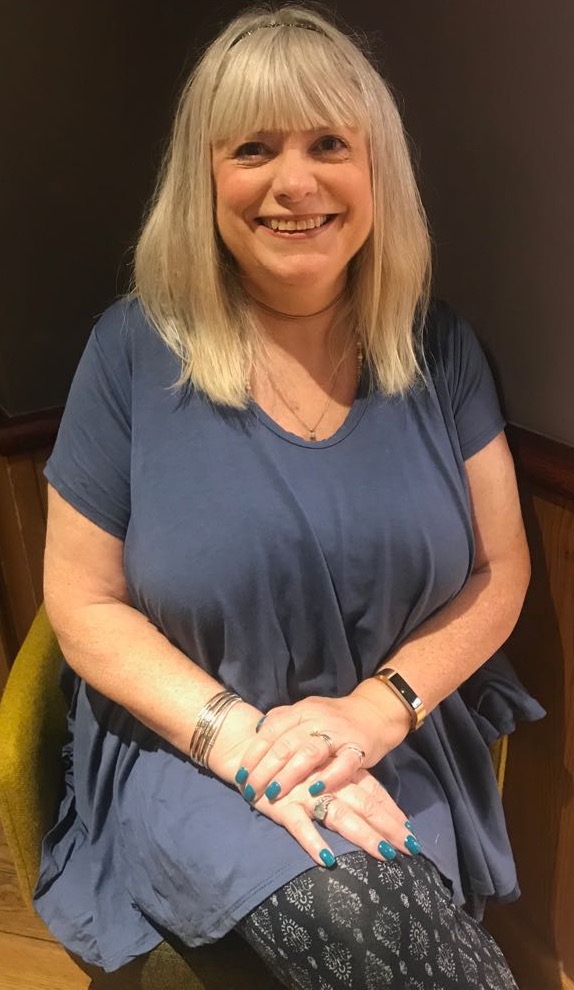
Let me briefly introduce myself. My name is Rayna and I am a UKCP registered child & adult psychotherapist, supervisor, trainer and educational wellbeing consultant.
I have worked in leading London state and independent schools for over 40 years, first as a teacher and examiner of French and then, after training as a counsellor and psychotherapist in my early 40s, as a school counsellor.
I started up my own private therapy practice, Metamorphosis Therapy Centre, in the year 2000, (for more details about me check out http://www.metamorphosistherapycentre.com), which I run from home and where I provide therapy and coaching for children, adolescents, adults and families of all ages and backgrounds. I also provide clinical supervision for qualified and trainee therapists.
In addition, I work as a school counsellor in two leading London girls schools and offer consultancy and training on any issues to do with mental health and emotional wellbeing.
I am a wife and mother of two adult girls; I have one grandson who is just over a year old and another grandchild on the way.
What this blog is about and why am I writing it?
My blog is aimed at women over 60 who may, like me, be going through a huge transition, which researchers have identified as a ‘late life crisis’ (although I would prefer to call it a later life transition)
This crisis is a recapitulation of the one we went through in our 40s; yet it is very different. Hence the title 60 is the new 40!
At that time, if we felt dissatisfied with our life, those of us who had the courage and the means, could change it. We could retrain for a new career as I did; we could reinvent ourselves by separating from or divorcing our partners; we could learn a completely new skill or start a new activity. We may have been aware of time but it didn’t hold us back.
Now I am in my 60s, I notice that, while the wish to keep renewing myself is the same, I have become much more conscious of the finite time I have ahead of me. Although I have always been conscious that we never know from one day to the next what life has in store for us, now that I get older, the prospect of becoming irrelevant or obsolete is far more in my awareness and I find that decisions about my future are increasingly harder to make.
I shall write more about this in another post. Suffice it to say here that I just wondered how other women my age experience their lives as they enter their 60s. I hope that we can inspire each other, help each other push through our blocks and live the life we have left as fully and vitally as possible, however long it may be.
 Rayna's Blog - 60 is the new 40!